

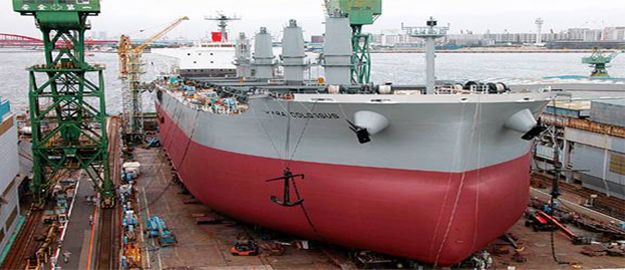
- EN 10067 Grade A Bulb Flat steel
- What is a bulb plate for shipbuilding?
- Bulb Flats for Shipbuilding and Construction Industry
- Flat bulb steel dimensions
- Flat bulb steel supplier
- NK DH36 bulb flat shipbuilding steel, NK D36 bulb flat shipbuilding steel
- RINA EH32 bulb flat shipbuilding steel, RINA E32 bulb flat shipbuilding steel
- RINA EH36 bulb flat shipbuilding steel, RINA E36 bulb flat shipbuilding steel
- RINA E bulb flat shipbuilding steel
- RINA DH32 bulb flat shipbuilding steel, RINA D32 bulb flat shipbuilding steel
- RINA DH36 bulb flat shipbuilding steel, RINA D36 bulb flat shipbuilding steel
- RINA D bulb flat shipbuilding steel
- RINA B bulb falt shipbuilding steel
- RINA bulb flat shipbuilding steel
- What is the difference between channel and angle steel?
- What is the standard size of a steel angle?
- A36 hot roll steel angle
- RINA Grade ABDE Marine Steel Plate
- ABS Grade A Shipbuilding Steel Angle Bar
- What is angle steel used for?
- What type of steel is used in angle bars?
- What are bulb flats used for?
- S235JR Shipbuilding Angle steel Dimensions
- A572 hot rolled angle steel with equal or unequal legs
- SS490 galvanized structural carbon angle steel under JIS3101 standard
- hot-dipped galvanized St 37-2 angle steel with unequal legs
- ASTM designation A36 angle steel applications
- ASTM A36 Hot-dip galvanized steel angle bar for corrosive environments
 Henan BEBON international co.,ltd located in zhengzhou ,henan province of china. Since it was established in 2008, Henan BEBON has earned an outstanding reputation for its professional exporting shipbuilding steel.About the products,we mainly specialized in steel products for shipbuilding which have been approved by some authoritative classification societies,likeLR,BV,ABS,DNV,GL and so on . Besides, we have three big warehouses--Zhengzhou,Tianjin and shanghai.
Q690C steel is created through processes such as alloy design and heat treatment in metallurgical processes. In steel production, the content and proportion of alloy elements are determined through alloy design to obtain the required steel properties. For Q690C steel, the alloy design considers the addition of a series of elements, such as carbon (C), silicon (Si), manganese (Mn), niobium (Nb), vanadium (V), titanium (Ti), etc., to ensure that the steel has High strength and excellent mechanical properties. In a steelmaking plant, raw materials with designed alloys, including iron ore, scrap steel and alloying elements, are put into a blast furnace or electric arc furnace for smelting. In this process, the raw materials are heated to high temperatures to melt and mix them evenly to form molten steel. The smelted molten steel needs to be refined to remove impurities and adjust the alloy composition. Commonly used methods in the refining process include converter smelting, electric arc furnace smelting, etc., by adding various reducing agents and oxidants to control the oxidation-reduction reaction and further improve the purity and uniformity of the molten steel. The refined molten steel is poured into a continuous casting machine, formed into a rectangular or square billet through continuous casting, and then cooled and solidified to form a steel billet. This step is usually called the continuous casting process, and its purpose is to quickly solidify the molten steel into a solid for subsequent rolling processing. The billet is hot or cold rolled through a rolling mill to press it into the desired shape and size. Through hot rolling or cold rolling, the structural structure and mechanical properties of steel can be changed, and the strength and plasticity of steel can be further improved. After steel is rolled, it may require heat treatment, such as normalizing, quenching and tempering, to adjust the structure and properties of the steel. During the heat treatment process, the steel is heated to a certain temperature and then rapidly cooled or heat-insulated to obtain the required mechanical properties and organizational structure.
Q690C steel is widely used and is mainly used in the following fields: Q690C steel is often used in the main load-bearing components of building structures, such as beams, columns, beam-column nodes, etc. Due to its high strength and good plasticity, it can withstand large loads and ensure the stability and safety of the structure. Q690C steel is widely used in projects such as high-rise buildings, bridges and large industrial plants. In bridge construction, Q690C steel is often used to manufacture the main structural components of bridges, such as bridge beam plates, bridge piers, and bridge decks. Its high strength and good plasticity can ensure the stability and safety of the bridge structure, and is suitable for bridge projects with various span and load requirements. In the field of automobile manufacturing, Q690C steel is often used to manufacture body structures, chassis components and safety systems. Due to its high strength and good plasticity, it can improve the safety and stability of automobiles and is suitable for manufacturing various types of automobiles and commercial vehicles. Q690C steel also has certain applications in shipbuilding, mainly used to manufacture hull structures and ship equipment. Its high strength and good weather resistance can ensure the safety of ships in harsh sea conditions and is suitable for marine engineering and shipbuilding fields. Q690C steel is often used to manufacture heavy machinery and engineering machinery, such as excavators, cranes, pressure vessels, etc. Due to its high strength and good processing performance, it can meet the manufacturing needs of various complex shapes and high strength requirements.
As market demand continues to increase, the varieties of Q690C steel may become more abundant in the future to meet the needs of different engineering projects. More types of Q690C steel may appear, such as weather-resistant Q690C steel, wear-resistant Q690C steel, etc., to adapt to more application needs in different environments and working conditions. With the continuous advancement of science and technology, the steel industry is also constantly undergoing technological innovation. In the future, the production process and material formula of Q690C steel may be further improved and optimized to improve its performance and processing technology and meet higher engineering requirements. With the improvement of environmental awareness, the production process of Q690C steel may pay more attention to energy saving and emission reduction in the future. Steel companies may adopt more environmentally friendly production processes to reduce energy consumption and emissions and reduce their impact on the environment. With the continuous advancement of national infrastructure construction and the development of emerging industries, the application fields of Q690C steel may be further expanded in the future. In addition to the traditional fields of construction, bridges, automobiles, ships and machinery manufacturing, it may also be involved in applications in new energy fields, marine engineering fields and other fields. With the in-depth development of global economic integration, international cooperation will become an important trend in the future development of the steel industry. The international market demand for Q690C steel is likely to increase, and international technical exchanges and cooperation will also be strengthened to promote the global development of this steel.
Q690C steel has high strength, good plasticity, excellent welding performance and wear resistance. It is suitable for various engineering projects and manufacturing fields. It is an important structural material with broad market prospects and development potential. Through continuous technological innovation and market expansion, Q690C steel will continue to play an important role in promoting the development of engineering construction and manufacturing in the future.