

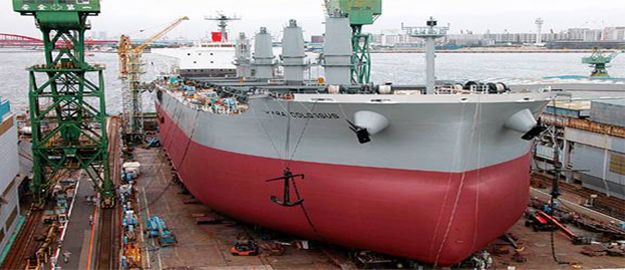
- EN 10067 Grade A Bulb Flat steel
- What is a bulb plate for shipbuilding?
- Bulb Flats for Shipbuilding and Construction Industry
- Flat bulb steel dimensions
- Flat bulb steel supplier
- NK DH36 bulb flat shipbuilding steel, NK D36 bulb flat shipbuilding steel
- RINA EH32 bulb flat shipbuilding steel, RINA E32 bulb flat shipbuilding steel
- RINA EH36 bulb flat shipbuilding steel, RINA E36 bulb flat shipbuilding steel
- RINA E bulb flat shipbuilding steel
- RINA DH32 bulb flat shipbuilding steel, RINA D32 bulb flat shipbuilding steel
- RINA DH36 bulb flat shipbuilding steel, RINA D36 bulb flat shipbuilding steel
- RINA D bulb flat shipbuilding steel
- RINA B bulb falt shipbuilding steel
- RINA bulb flat shipbuilding steel
- What is the difference between channel and angle steel?
- What is the standard size of a steel angle?
- A36 hot roll steel angle
- RINA Grade ABDE Marine Steel Plate
- ABS Grade A Shipbuilding Steel Angle Bar
- What is angle steel used for?
- What type of steel is used in angle bars?
- What are bulb flats used for?
- S235JR Shipbuilding Angle steel Dimensions
- A572 hot rolled angle steel with equal or unequal legs
- SS490 galvanized structural carbon angle steel under JIS3101 standard
- hot-dipped galvanized St 37-2 angle steel with unequal legs
- ASTM designation A36 angle steel applications
- ASTM A36 Hot-dip galvanized steel angle bar for corrosive environments
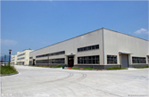 Henan BEBON international co.,ltd located in zhengzhou ,henan province of china. Since it was established in 2008, Henan BEBON has earned an outstanding reputation for its professional exporting shipbuilding steel.About the products,we mainly specialized in steel products for shipbuilding which have been approved by some authoritative classification societies,likeLR,BV,ABS,DNV,GL and so on . Besides, we have three big warehouses--Zhengzhou,Tianjin and shanghai.
30CrMo is a low alloy steel that is usually used to manufacture parts and components with high strength, high wear resistance and high temperature strength requirements. The "30" in the steel's name represents its carbon content of approximately 0.30%, while "CrMo" indicates that it contains alloying elements such as chromium (Cr) and molybdenum (Mo).30CrMo steel has various advantages that make it widely used in the engineering field. Alloying elements such as chromium and molybdenum are added to 30CrMo steel. These alloying elements can improve the strength, hardness and wear resistance of the steel, making it more suitable for high-strength and high-load engineering applications. 30CrMo steel has good heat treatment properties, and its organizational structure and properties can be adjusted through heat treatment processes such as normalizing and quenching to meet the needs of different engineering applications. After proper heat treatment, 30CrMo steel has high strength, high hardness and good toughness, and can withstand high stress and high load working conditions. Due to the addition of alloy elements, 30CrMo steel has good wear resistance and corrosion resistance, which improves its durability in harsh environments and extends the service life of parts. 30CrMo steel has good processability and can be formed and processed through various processing techniques to manufacture parts and components of complex shapes to meet the needs of different engineering projects.
30CrMo steel has been widely used in various engineering fields due to its excellent mechanical properties and wear resistance. 30CrMo steel is commonly used to manufacture various mechanical parts and components, such as bearings, gears, shafts, pins, gears, connecting rods, swing arms, etc. Due to its high strength and hardness, 30CrMo steel is able to withstand high load and high stress working conditions while having good wear resistance, extending the service life of components. 30CrMo steel plays an important role in automobile manufacturing and is often used to manufacture key components such as engine parts, transmission systems, and suspension systems. Its high strength and excellent wear resistance enable it to withstand the high load and high pressure working environment of automobile engines and transmission systems, while extending the service life of components. 30CrMo steel also has important applications in the aerospace field, and is often used to manufacture aircraft engine parts, aircraft structural parts, etc. Its high strength and excellent mechanical properties enable it to withstand the challenges of high-speed aircraft flight and complex loads, while having good corrosion resistance in harsh environments. 30CrMo steel is widely used in the petrochemical industry to manufacture pressure vessels, reactors, heat exchangers, pipelines and other equipment and components. Its corrosion resistance and high temperature resistance enable it to work stably in harsh chemical environments and ensure long-term stable operation of the equipment. 30CrMo steel is often used in the manufacturing of energy equipment, such as boilers, steam turbines, generators and other key components. Its high strength and wear resistance allow it to withstand high temperature and pressure working conditions while maintaining stable performance and reliability.
30CrMo steel has some similarities with other similar materials. Common similar materials include: 4130 steel and 30CrMo steel are similar in chemical composition and mechanical properties. They are both low alloy steels and have high strength, good toughness and Excellent wear resistance. They are often used in similar application areas such as aerospace, automotive manufacturing and machine building. 34CrMo4 steel and 30CrMo steel are also similar in chemical composition and performance. They are both low alloy steels with high strength and good wear resistance. They are often used in similar applications such as manufacturing pressure vessels, pipes, machine parts, etc. 35CrMo steel has certain similarities with 30CrMo steel. Although they are slightly different in chemical composition, they are both low alloy steels with similar mechanical properties and wear resistance. They are often used in similar engineering fields such as manufacturing machine parts, drive shafts, gears, etc. 25CrMo4 steel and 30CrMo steel also have certain similarities. They both contain alloying elements such as chromium and molybdenum and have similar strength and hardness. They are often used in similar applications such as manufacturing high-strength mechanical parts and structural components.
Although 30CrMo steel has excellent properties and wide applications in many aspects, it may face some potential challenges and disadvantages in future development, including: With the development of science and technology and the emergence of new materials, new types of steel may appear. Materials that can replace 30CrMo steel. The new material may have better performance, higher strength, hardness and wear resistance, thereby replacing the application of 30CrMo steel in some fields to a certain extent. In the current context of environmental protection and sustainable development, there are increasing requirements for the environmental friendliness and recyclability of materials. If 30CrMo steel produces a large amount of pollutants during production and use or is difficult to recycle, it may be restricted by environmental regulations and the market. As market competition intensifies, product cost control has become an important consideration for companies. If other materials can provide lower costs with equivalent performance, it may have an impact on the market competitiveness of 30CrMo steel. With the continuous advancement of science and technology, the emergence of new material processing and heat treatment technologies may change the manufacturing and processing technology of 30CrMo steel. If the new technology can improve the performance of other materials or reduce costs, it may affect the market position of 30CrMo steel.