

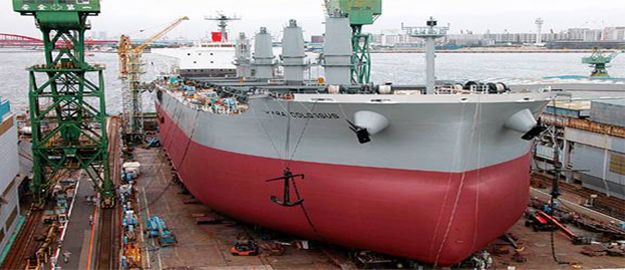
- EN 10067 Grade A Bulb Flat steel
- What is a bulb plate for shipbuilding?
- Bulb Flats for Shipbuilding and Construction Industry
- Flat bulb steel dimensions
- Flat bulb steel supplier
- NK DH36 bulb flat shipbuilding steel, NK D36 bulb flat shipbuilding steel
- RINA EH32 bulb flat shipbuilding steel, RINA E32 bulb flat shipbuilding steel
- RINA EH36 bulb flat shipbuilding steel, RINA E36 bulb flat shipbuilding steel
- RINA E bulb flat shipbuilding steel
- RINA DH32 bulb flat shipbuilding steel, RINA D32 bulb flat shipbuilding steel
- RINA DH36 bulb flat shipbuilding steel, RINA D36 bulb flat shipbuilding steel
- RINA D bulb flat shipbuilding steel
- RINA B bulb falt shipbuilding steel
- RINA bulb flat shipbuilding steel
- What is the difference between channel and angle steel?
- What is the standard size of a steel angle?
- A36 hot roll steel angle
- RINA Grade ABDE Marine Steel Plate
- ABS Grade A Shipbuilding Steel Angle Bar
- What is angle steel used for?
- What type of steel is used in angle bars?
- What are bulb flats used for?
- S235JR Shipbuilding Angle steel Dimensions
- A572 hot rolled angle steel with equal or unequal legs
- SS490 galvanized structural carbon angle steel under JIS3101 standard
- hot-dipped galvanized St 37-2 angle steel with unequal legs
- ASTM designation A36 angle steel applications
- ASTM A36 Hot-dip galvanized steel angle bar for corrosive environments
 Henan BEBON international co.,ltd located in zhengzhou ,henan province of china. Since it was established in 2008, Henan BEBON has earned an outstanding reputation for its professional exporting shipbuilding steel.About the products,we mainly specialized in steel products for shipbuilding which have been approved by some authoritative classification societies,likeLR,BV,ABS,DNV,GL and so on . Besides, we have three big warehouses--Zhengzhou,Tianjin and shanghai.
Large diameter spiral welded pipes represent a critical component of modern infrastructure projects, serving as essential conduits for transporting fluids, gases, and solids across vast distances. These pipes, characterized by their spiral seam construction and substantial diameters, offer unique advantages over traditional welded and seamless pipes, making them indispensable in industries such as oil and gas, water supply, and construction. Large diameter spiral welded pipes are manufactured through a continuous spiral welding process, wherein steel strips are rolled into cylindrical shapes and welded along the seam using submerged arc welding (SAW) or electric resistance welding (ERW) techniques. The spiral seam configuration provides inherent strength and stability to the pipes, enabling them to withstand high internal pressures, external loads, and environmental factors.
Large diameter spiral welded pipes offer versatility in terms of size, wall thickness, and material specifications, allowing for customization to meet specific project requirements. Their flexible design and manufacturing capabilities enable the production of pipes with diameters ranging from several inches to several feet, catering to diverse applications in various industries.The spiral seam construction of large diameter welded pipes imparts exceptional strength and durability, making them suitable for transporting fluids, slurries, and solids under demanding conditions. Their ability to withstand external loads, internal pressures, and bending stresses ensures long-term performance and reliability in critical infrastructure applications.Large diameter spiral welded pipes are available in a wide range of corrosion-resistant materials, including carbon steel, stainless steel, and alloy steel, to suit different operating environments and fluid compositions. Protective coatings and linings can be applied to enhance corrosion resistance and prolong the service life of the pipes in aggressive media such as corrosive fluids or soil conditions.Compared to seamless pipes and traditional welded pipes, large diameter spiral welded pipes offer cost-effective solutions for transporting fluids over long distances or through challenging terrain. Their efficient manufacturing process, high production volumes, and economies of scale result in competitive pricing and reduced overall project costs for infrastructure developers and operators.
Large diameter spiral welded pipes are extensively used in oil and gas transmission pipelines for transporting crude oil, natural gas, and refined products from production fields to processing facilities and distribution centers. Their high strength, corrosion resistance, and cost-effectiveness make them preferred materials for long-distance pipelines traversing diverse terrain and environmental conditions.Municipal water supply systems, wastewater treatment plants, and irrigation networks rely on large diameter spiral welded pipes for conveying potable water, sewage, and reclaimed water to urban centers, industrial facilities, and agricultural areas. Their corrosion resistance, durability, and smooth interior surfaces ensure reliable performance and minimal maintenance in water distribution and wastewater conveyance applications.Large diameter spiral welded pipes play a vital role in infrastructure projects such as bridge construction, tunneling, and foundation piling, where deep excavations and underground structures require robust structural support and drainage solutions. These pipes serve as casing pipes, pile casings, and culverts for protecting foundations, controlling groundwater, and facilitating drainage in civil engineering projects.In the mining and mineral processing industry, large diameter spiral welded pipes are utilized for transporting ores, slurries, and tailings in open-pit mines, underground mines, and mineral processing plants. Their abrasion resistance, corrosion resistance, and high flow capacity make them ideal for conveying abrasive materials and corrosive fluids in harsh mining environments.Large diameter spiral welded pipes play a crucial role in energy infrastructure development projects, including power generation, renewable energy, and industrial facilities. They are used for conveying cooling water, process fluids, and industrial gases in power plants, refineries, chemical plants, and manufacturing facilities, supporting the efficient operation and expansion of energy infrastructure worldwide.
Large diameter spiral welded pipes offer advantages in terms of installation and handling due to their lightweight construction, modular design, and ease of transportation. Their flexible manufacturing process allows for the production of long-length pipes, reducing the number of joints and welds required during installation, thereby minimizing labor costs and construction time.The robust construction and superior materials used in large diameter spiral welded pipes ensure reliable performance and longevity in demanding applications. Their resistance to corrosion, erosion, and fatigue, coupled with proper maintenance and protective measures, contribute to extended service life and reduced lifecycle costs for infrastructure projects.Large diameter spiral welded pipes support environmental sustainability initiatives by facilitating the efficient transport of resources, reducing energy consumption, and minimizing environmental impact. Their use in water distribution, wastewater conveyance, and energy infrastructure helps conserve natural resources, protect ecosystems, and mitigate the carbon footprint of industrial activities.Large diameter spiral welded pipes demonstrate adaptability and resilience in diverse operating conditions, including fluctuating temperatures, soil movements, and seismic events. Their ability to accommodate thermal expansion, ground settlement, and external loads ensures structural integrity and performance reliability in dynamic environments.
Ensuring the quality and integrity of large diameter spiral welded pipes requires stringent quality control measures, including material testing, weld inspection, and non-destructive testing techniques. Compliance with industry standards and regulatory requirements is essential to mitigate the risk of defects, weld flaws, and performance issues that could compromise pipeline safety and reliability.Maintaining the integrity of large diameter spiral welded pipelines requires proactive inspection, monitoring, and maintenance programs to detect and address corrosion, erosion, and mechanical damage. Implementing asset management strategies, corrosion protection measures, and integrity assessment techniques is crucial to prolonging the service life and reliability of pipeline infrastructure.Managing risks associated with large diameter spiral welded pipelines involves identifying potential hazards, assessing consequences, and implementing risk mitigation measures to protect public safety and environmental resources. Pipeline operators must adhere to strict safety protocols, emergency response plans, and regulatory guidelines to prevent accidents, spills, and environmental contamination incidents.
Ongoing research and development efforts focus on advancing the materials and coatings used in large diameter spiral welded pipes to enhance corrosion resistance, abrasion resistance, and mechanical properties. Innovations in alloy design, surface treatments, and nanocomposite coatings aim to improve performance, durability, and sustainability for next-generation pipeline systems.Integration of digital technologies and smart sensors into large diameter spiral welded pipelines enables real-time monitoring, predictive maintenance, and data-driven decision-making for infrastructure management. Smart pipelines equipped with sensors, IoT devices, and predictive analytics software provide insights into pipeline health, integrity, and performance, optimizing operations and minimizing downtime.Rehabilitation and upgrade programs for existing large diameter spiral welded pipelines focus on enhancing corrosion protection, leak detection, and structural integrity through retrofits, repairs, and lining solutions. Techniques such as cathodic protection, composite wraps, and trenchless technologies enable cost-effective upgrades and extensions of pipeline assets while minimizing disruption to communities and ecosystems.
Large diameter spiral welded pipes represent a cornerstone of modern infrastructure, supporting the efficient transport of fluids, gases, and solids in diverse industries and applications. Their robust construction, corrosion resistance, and cost-effectiveness make them indispensable components of pipelines, water supply networks, and energy infrastructure worldwide. As advancements in materials science, digitalization, and sustainability drive innovation in pipeline technology, the future holds promise for safer, more reliable, and environmentally responsible solutions that meet the evolving needs of society and the economy.